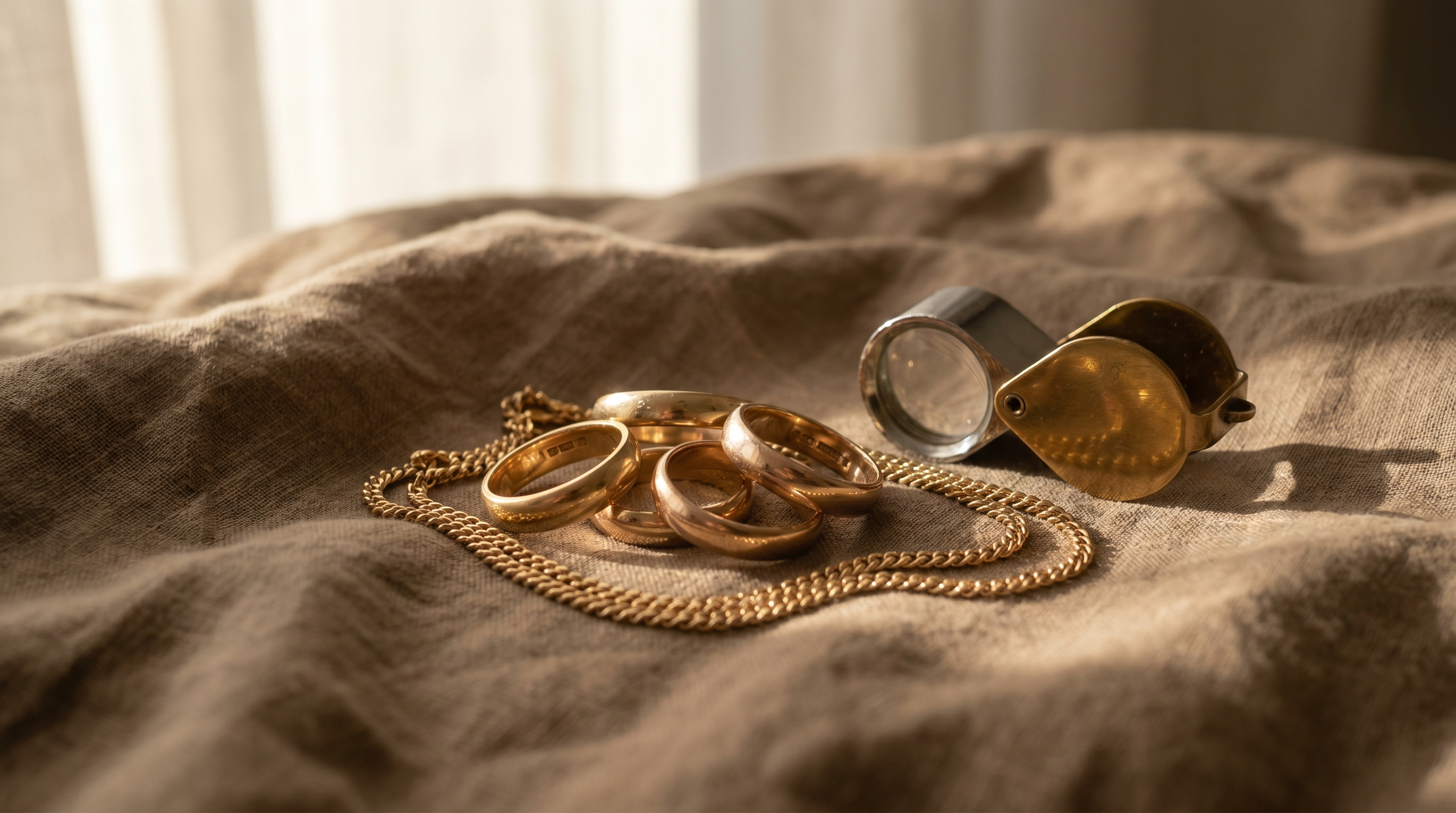


Three colours.
Gold is not one colour. Rose, yellow and white gold are the same precious metal, mixed three different ways — and the choice between them is more about you than about the stone.
Why one gold comes in three colours.
Here is the part most people are never told: rose, yellow and white gold can all be 18K. The karat is the purity — how much of the metal is actually gold. The colour is the recipe — what the remaining quarter is mixed with. So an 18K rose ring and an 18K white ring hold exactly the same amount of gold. They simply wear it differently.
Pure gold — 24K — is soft enough to mark with a fingernail; it cannot hold a stone securely or survive daily wear. So it is alloyed with stronger metals. At 18K, three-quarters is gold and one-quarter is alloy — and that quarter does two jobs at once: it adds strength, and it sets the colour. (If the karat itself is new to you, start with what 18K, 22K and 24K actually mean.)
Yellow gold
Gold's natural tone, warmed with copper and silver. The traditional choice — it flatters warm and olive skin, and reads as continuous against a coloured stone. It also shows the least wear, since any small scratch is the same colour all the way through.
Rose gold
The same gold mixed with more copper, which pulls it pink — soft, quietly flattering, faintly vintage. It suits pink and red stones, and pieces meant to sit close to the skin, where the warmth carries.
White gold
Gold alloyed with white metals and finished with a thin rhodium plating for brightness — the natural partner for diamonds and cool-toned stones. One honest note: the rhodium wears in time and is simply re-applied as a service.

So which should you choose?
Start with what you already wear — gold looks most considered when it agrees with itself, so match the metal you reach for daily. Then think about the stone: warm stones tend to sing in yellow or rose; diamonds and cool stones in white. And finally your skin — warmer undertones lean yellow and rose, cooler undertones lean white, though this is a guide, not a rule. You can see how warm metals behave against colour across the Colour collection, and how white gold carries diamonds through the Quiet collection.
The right metal is the one you stop noticing — because it simply looks like you.
Blaise Huxley · On CraftDoes the colour change the price?
Barely — and not for the reason people assume. Because all three are 18K, the gold content, and therefore most of the cost, is the same. Rose and yellow are mixed from common alloys; white gold can cost a little more for the white metals and the rhodium finishing, but at 18K that difference is small next to the stone itself. If a piece is priced far higher for one colour alone, it is fair to ask why.
Will the colour fade?
Yellow and rose gold keep their colour for life — the tone runs all the way through the metal, so wear only softens the surface into a patina that polishes back. White gold is the exception: its brightness comes partly from the rhodium plating, which gradually wears and lets a faint warm tone show through. Re-plating restores it, and it is a routine, inexpensive service — worth knowing before you choose white, not after. (More on keeping any gold well in our care guide.)
Every piece we make is 18K — in all three colours. The easiest way to choose is to see them together.