

The rest is strength.
18K is 75 percent gold by weight, every time. The figure is not a style or a grade — it is arithmetic.
Karat is a proportion, not a promise.
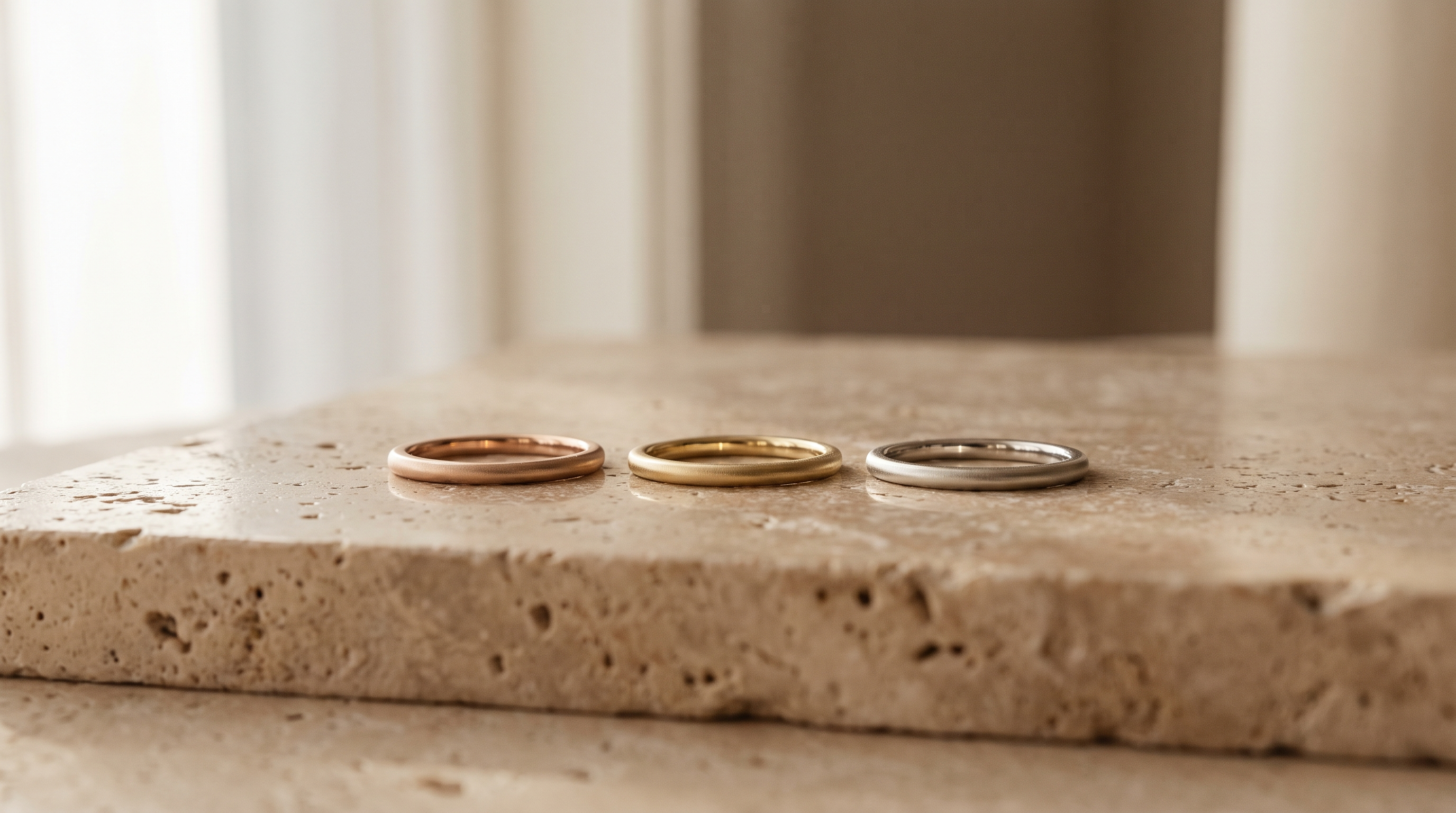
Gold purity is measured in karats, out of a possible twenty-four. Pure gold — 24K — is too soft for daily wear: it scratches, bends, and lets go of stones. So fine jewellery is alloyed with harder metals, and the karat number tells you the exact proportion. At 18K, three-quarters is gold; the remaining quarter does two jobs — it adds strength, and it sets the colour, which is its own subject in rose, yellow or white gold.
Gold-plated
A base metal under a microscopically thin gold surface that wears through with time. The word "gold" is doing a great deal of work here.
Vermeil
Sterling silver under a thicker gold layer. Better than plated, and honest when labelled — but still a coating, not solid gold.
Gold-filled
A bonded sheet of gold, thicker again. Sturdier than the others — and still not solid gold all the way through.

Ask to see the hallmark.
Inside an 18K band you should find a small stamp — 750, 18K or 18ct — struck into the metal itself. It is deliberate, and it is checkable. Ask to see it under a loupe before you buy, anywhere, including here. A maker with nothing to hide will hand you the loupe.
The word "gold" by itself does not tell you what you are holding. The number does.
Blaise Huxley · On CraftWhy 18K is the line we hold.
Below 18K the trade-offs show: 14K — 58.5 percent, hallmarked 585 — is harder still and common in mass-market jewellery, but the colour sits paler and the value tracks the lower gold content; 9K and 10K are mostly alloy. Above it, 22K is loved across Asia for its deep colour, but on a thin band it is soft enough to mark in ordinary wear. 18K is the point where gold is pure enough to feel like gold and strong enough to wear without thinking.
Every piece we make is solid 18K — hallmarked, with the stone and setting stated plainly in writing.