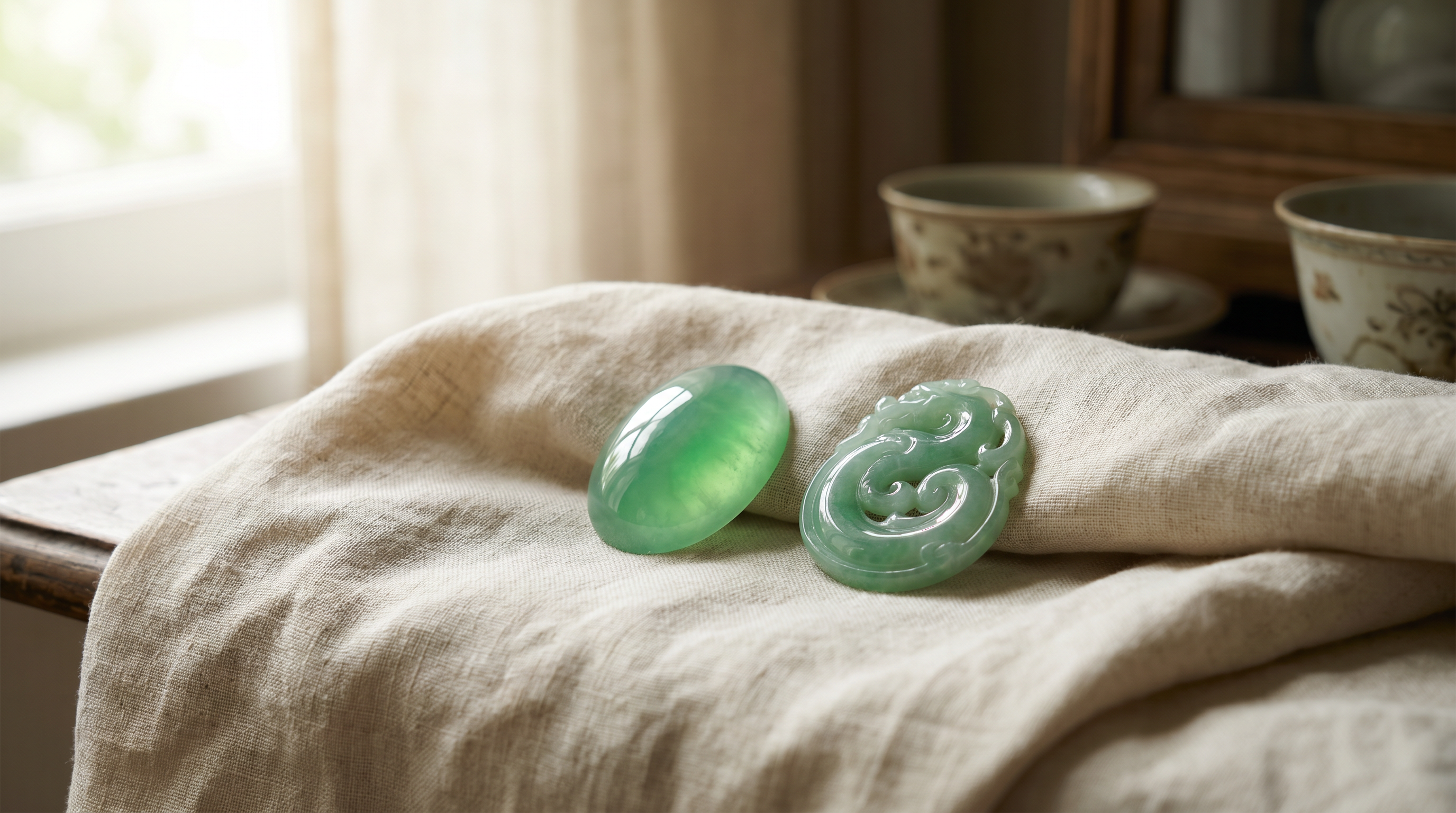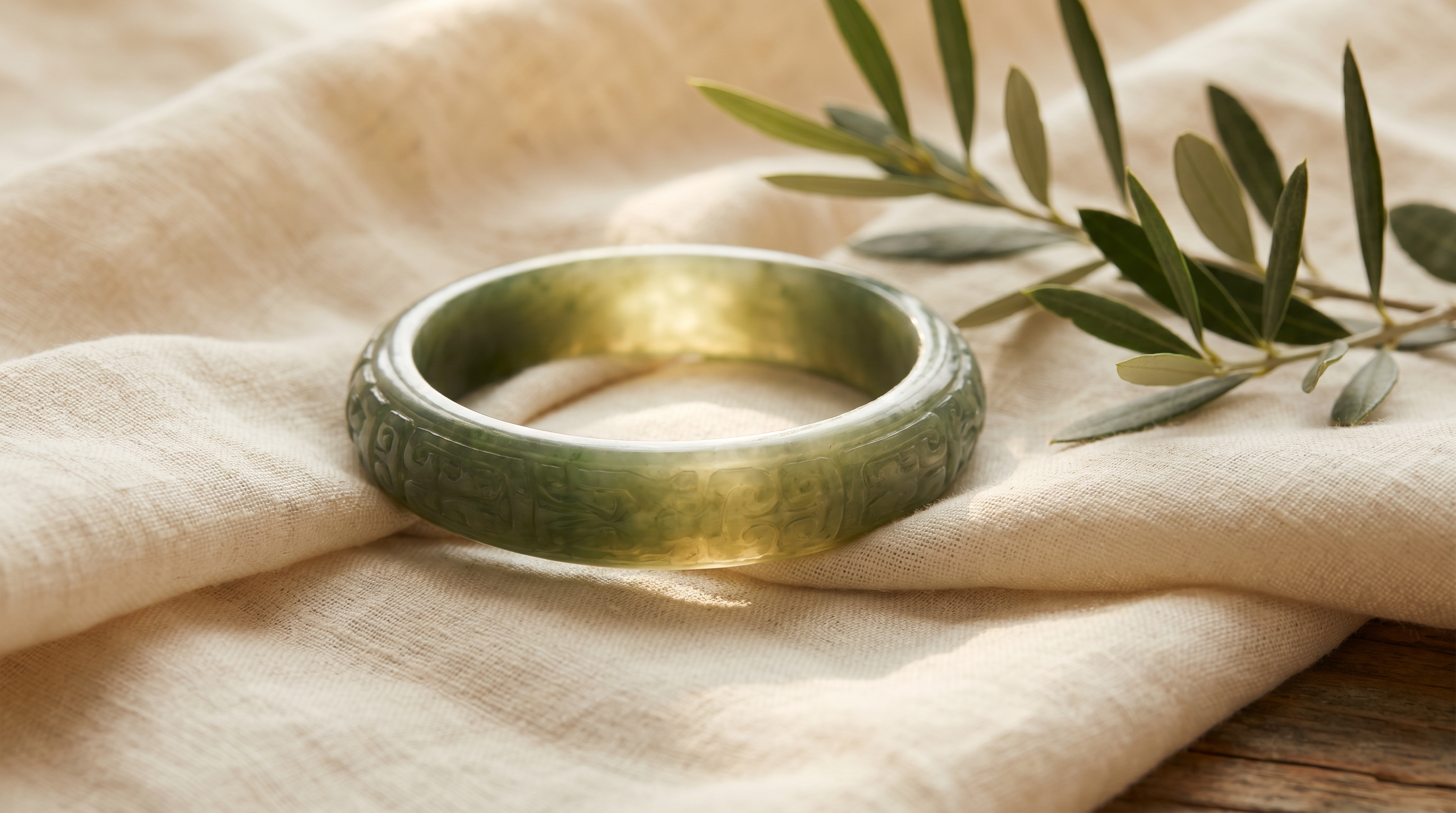


read in the stone.
Jade is the one stone where two pieces of the same green can be worlds apart in value — and nothing on the price tag tells you why. The worth is in the stone itself: whether it is natural, how the colour sits, how light moves through it. Learn to read those, and the question answers itself.
Fine, natural jade holds. Treated jade does not.
Is jade worth buying? Natural, untreated jade — graded Type A — has held its worth across generations, and the best of it is among the most sought-after material in the world. Treated jade is another thing entirely: bleached, filled or dyed to look better than it is, priced low for a reason, and inclined to lose what looks it has. So the honest answer is this — jade is worth buying when the stone is real and the colour is its own. The category is not the point. The individual stone is.
Colour
An even, saturated green is the most prized — but a clean lavender, a soft icy white or a warm honey each have their following. What matters is that the colour is natural, spread evenly through the stone, and not pooled along dyed fractures.
Translucency
Hold it to the light. The finest jade lets light travel into the stone and glow back — what the trade calls its water. A flat, opaque look sits far lower; a clear, luminous depth sits at the very top.
Texture
Under the eye, fine jade reads as smooth and tight-grained, almost without structure. A coarse texture — a visible orange-peel on the polished surface — marks a lesser stone, whatever its colour.

And whether it is natural at all.
Colour, translucency and texture set the worth of a stone — but only once you know the stone is untouched. Type A jade is natural: cut and polished, nothing added. Type B has been bleached and filled with resin; Type C has been dyed. Both can look convincing on the day, and both quietly yellow or fade with the years. It is the single fact that decides whether a jade piece is worth keeping — and the one to ask about first.
Two jade bangles can share a colour and not a value. The difference is everything you cannot see at a glance.
Blaise Huxley · On CraftIs jade worth more than gold? It can be — but ask of the piece, not the metal.
Gram for gram, a fine natural jadeite of top colour and translucency can be worth far more than gold, and rival fine diamonds. But that is true of the very best — not of jade as a category. Most jade on the market is modest, and a good deal of it is treated. The useful question is never whether jade is valuable in the abstract; it is whether this jade is valuable — and that returns, every time, to type, colour and light. A plain gold band of known weight has a floor under its price. A jade stone is worth exactly what the stone is.
Buy on what can be shown, not on trust.
Singapore has no shortage of jade, and no shortage of treated jade sold as natural. The safeguard is simple, and it is yours to ask for: have the piece confirmed as Type A, in writing, with a report from a gemological laboratory. See it in daylight, hold it to the light, and let the seller show you why it is what they say it is. If you are weighing one green against another, our note on jadeite and nephrite is a useful place to start. A piece with nothing treated has nothing to hide — and that, more than any price, is what makes jade worth buying.
Worth keeping is worth seeing in person.